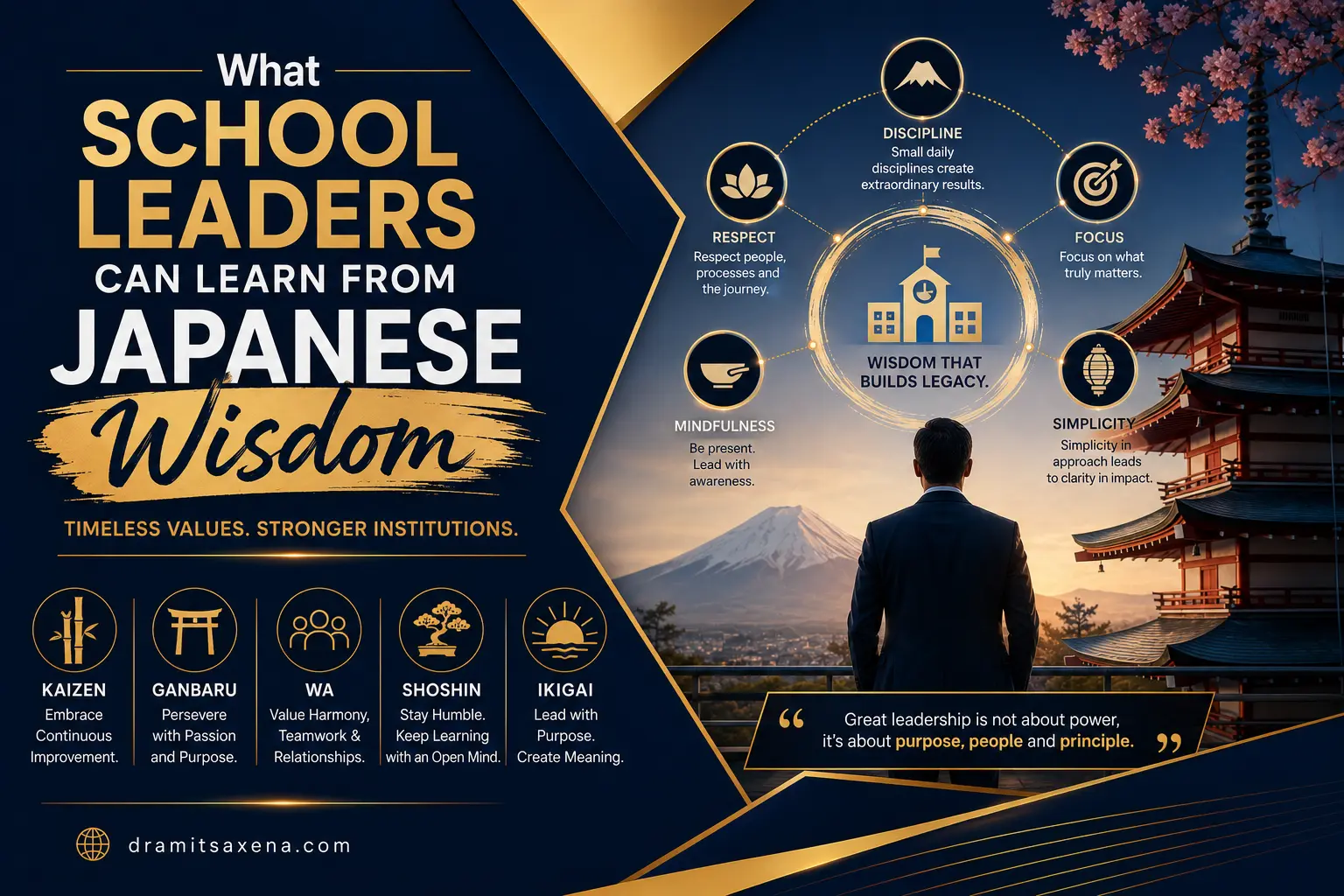
Five Timeless Principles for Building Future-Ready Schools
By Dr. Amit Saxena
CEO, Sparsh Universe
In an era where educational institutions are navigating unprecedented change, school leadership is no longer about managing systemsâÂÂit is about inspiring people, shaping culture, and creating environments where every learner and educator can thrive. While technology continues to redefine classrooms, the timeless principles of human-centered leadership remain unchanged.
Japan, a nation admired for its discipline, resilience, and pursuit of excellence, offers profound lessons that school leaders across the world can embrace. These philosophies are not merely cultural concepts; they are leadership frameworks capable of transforming schools into vibrant learning communities.
1.
Ikigai â Lead with Purpose
Every successful institution begins with a compelling âÂÂwhy.âÂÂ
Ikigai, meaning âÂÂreason for being,â reminds leaders that schools exist for far more than examinations, rankings, or compliance. Their true purpose is to shape lives, nurture character, and prepare young people for meaningful futures.
Purpose-driven schools:
- Align every decision with their educational mission.
- Build a culture of belonging and shared vision.
- Inspire teachers through meaning rather than authority.
When leaders communicate purpose consistently, commitment naturally follows.
2.
Kaizen â Improve Every Day
Transformation is rarely revolutionary; it is consistently evolutionary.
The philosophy of Kaizen teaches that excellence emerges through continuous, incremental improvement. Rather than waiting for major reforms, exceptional schools celebrate small daily victories.
Leaders practicing Kaizen:
- Encourage reflective teaching.
- Use evidence and feedback for improvement.
- Foster innovation without fear of failure.
- Celebrate progress alongside achievement.
Schools become extraordinary not because they change overnight, but because they improve every single day.
3.
Shoshin â Never Stop Learning
Leadership begins with humility.
Shoshin, or the âÂÂBeginnerâÂÂs Mind,â encourages leaders to remain curious regardless of their experience. In education, the greatest leaders are lifelong learners who welcome fresh perspectives.
This mindset encourages leaders to:
- Listen deeply to students, teachers, and parents.
- Embrace innovation and emerging educational practices.
- Replace certainty with curiosity.
- View every challenge as an opportunity to learn.
A school flourishes when its leader is the first learner.
4.
Hara Hachi Bu â Focus on What Matters Most
Japanese wisdom teaches moderation through the concept of Hara Hachi BuâÂÂstopping when one is 80% full.
Applied to leadership, it is a reminder that effectiveness is not measured by a crowded calendar but by meaningful impact.
School leaders should:
- Prioritize high-value initiatives.
- Reduce unnecessary administrative burden.
- Protect staff well-being.
- Create space for reflection and creativity.
Leadership is ultimately about managing energy, not merely managing time.
5.
Hansei â Reflect Before Moving Forward
Continuous growth requires honest self-reflection.
Hansei emphasizes learning from mistakes without assigning blame. Reflection transforms experience into wisdom.
Schools embracing Hansei:
- Conduct thoughtful post-project reviews.
- Encourage accountability with psychological safety.
- Learn openly from setbacks.
- Build a culture of trust and continuous learning.
Reflection is not a sign of weaknessâÂÂit is the foundation of leadership maturity.
From Inspiration to Institutional Excellence
These five Japanese principles offer more than philosophical inspirationâÂÂthey provide a practical blueprint for educational transformation.
At Sparsh Universe, we believe that world-class education is built upon purposeful leadership, continuous improvement, lifelong learning, balanced execution, and reflective practice. While infrastructure and technology strengthen schools, it is leadership culture that ultimately determines their success.
The future belongs to schools that nurture not only academic excellence but also resilient educators, compassionate leaders, and responsible global citizens.
As educational leaders, we must ask ourselves:
- Are we leading with purpose?
- Are we improving every day?
- Are we learning with humility?
- Are we focusing on what truly matters?
- Are we reflecting honestly to become better?
The answers to these questions will define not only the future of our schools but also the future of the generations we serve.
Japanese wisdom provides the mindset. Leadership provides the direction. Action creates transformation.
Lead with purpose. Learn continuously. Reflect deeply. Transform lives.