By Dr. Amit Saxena
CEO, Sparsh Universe
âÂÂThe greatest skill you can learn is to stay in a good mood when there are hundreds of reasons not to.âÂÂ
At first glance, this appears to be a simple motivational quote. But for those who lead institutions, businesses, or even families, it is one of the most profound leadership lessons.
Leadership is rarely tested when everything is going well. It is tested on difficult days, when admissions are slow, targets are missed, markets are uncertain, key people leave, criticism is loud, and expectations continue to rise. In such moments, knowledge and experience certainly matter, but what matters even more is the leaderâÂÂs emotional stability.
A leaderâÂÂs mood is contagious.
Walk into an office with anxiety, and the entire organisation begins to feel uncertain. Walk into the same office with calm confidence, and people believe that every challenge has a solution. The difference is not the problem; it is the person leading through it.
At Sparsh Universe, we believe education is not merely about imparting knowledge , it is about shaping character. Students learn resilience not only from textbooks but from the adults they observe every day. Teachers inspire confidence when they remain composed under pressure. School leaders create cultures of optimism by demonstrating that setbacks are temporary, but values are permanent.
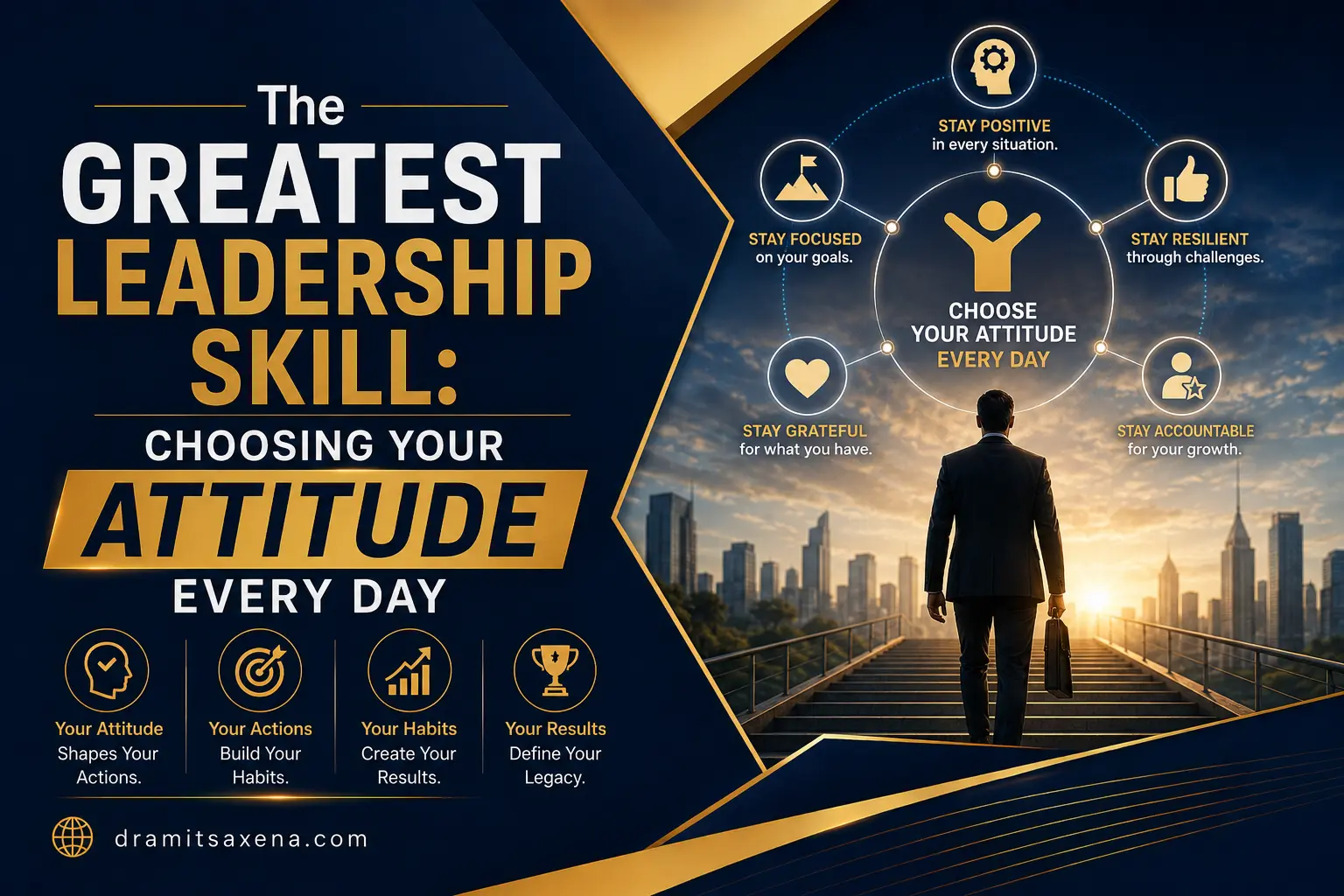
Staying in a good mood does not mean pretending that problems do not exist. It means choosing optimism over panic, solutions over complaints, and purpose over pressure. It is emotional discipline ,the ability to respond thoughtfully instead of reacting emotionally.
TodayâÂÂs world is filled with uncertainty. Artificial Intelligence is transforming industries, expectations from educational institutions are changing rapidly, and the pace of disruption has never been greater. In such an environment, the greatest competitive advantage is not technology alone; it is the mindset of the people leading change.
Every day presents us with hundreds of reasons to feel frustrated. But it also offers countless opportunities to inspire, innovate, and influence. The choice belongs to us.
As leaders, we owe it to our teams, our students, our parents, and ourselves to be the calm in the storm. Positivity is not weakness; it is strength under control. It is the quiet confidence that says, âÂÂWe will find a way.âÂÂ
The future will not belong to those who never face difficulties. It will belong to those who can maintain clarity, courage, and composure despite them.
After all, success is not defined by the absence of challenges, but by the attitude with which we face them.
Because the greatest skill we can ever master is not avoiding problems, it is mastering ourselves.