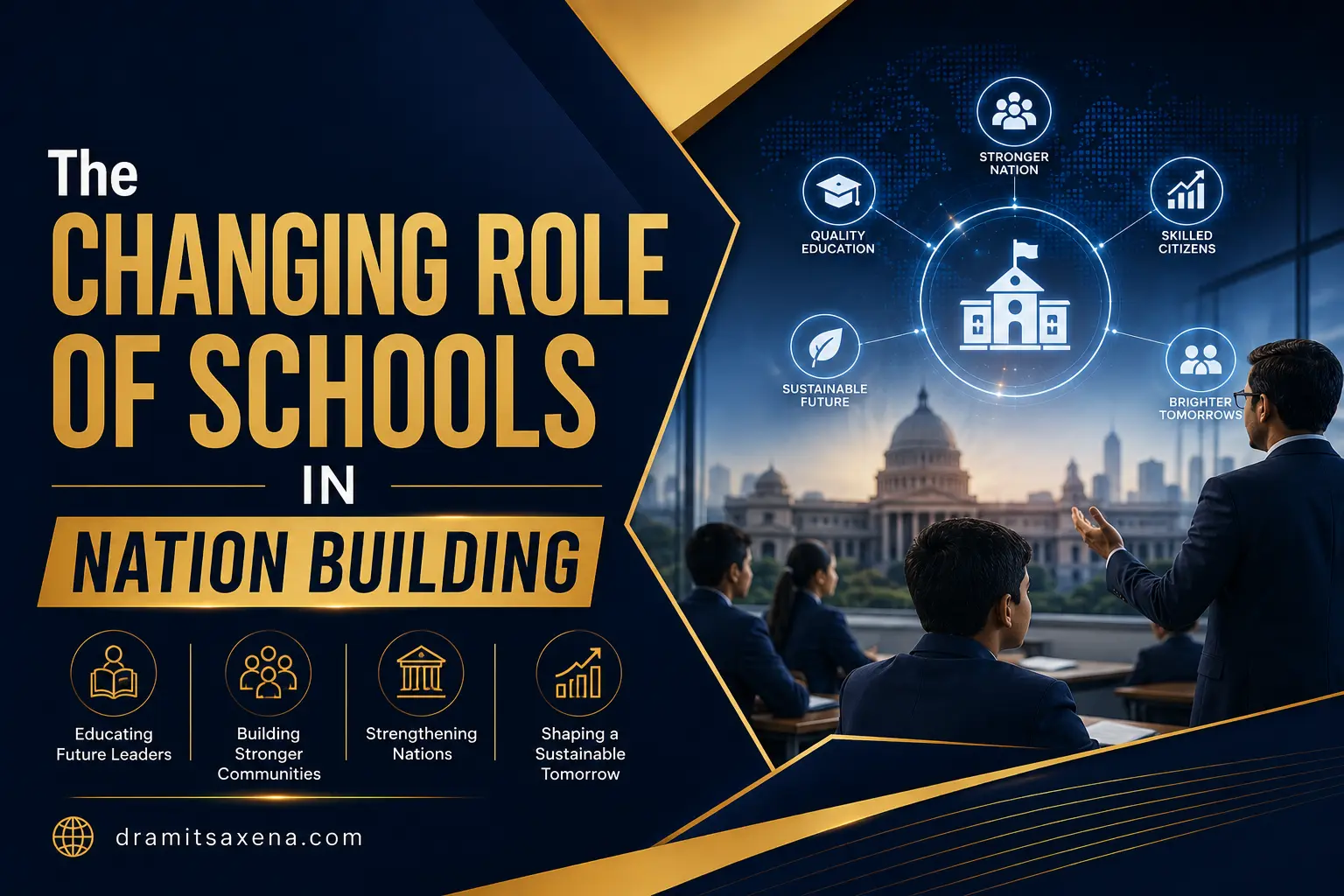
By Dr. Amit Saxena
CEO â Education, Sparsh Universe
For generations, schools have been regarded as institutions that impart knowledge, prepare students for examinations, and shape future careers. While these responsibilities remain important, the role of schools has undergone a profound transformation. Today, schools are no longer merely centres of education, they are architects of the nationâÂÂs future.
As India moves towards becoming a global economic and knowledge powerhouse, the expectations from schools have expanded far beyond academic excellence. The true measure of a school today lies not in the number of toppers it produces, but in the number of responsible, compassionate, innovative, and resilient citizens it nurtures.
Nation building begins long before a citizen casts a vote, enters the workforce, or assumes a leadership role. It begins in the classroom.
The National Education Policy 2020 has rightly shifted the conversation from rote learning to competency-based education, critical thinking, creativity, and holistic development. This reflects a larger truth: the future of any nation depends on the quality of its education system.
The schools of tomorrow must therefore, cultivate not only intellectual capital but also moral capital. Character, integrity, empathy, environmental consciousness, and social responsibility must become as important as mathematics and science. Academic success without values may create professionals, but values combined with knowledge create nation builders.
Technology has further redefined the schoolâÂÂs purpose. Artificial Intelligence, automation, and digital transformation are reshaping every profession. In such a world, information is readily available; what truly matters is the ability to analyse, innovate, collaborate, and solve complex problems. Schools must therefore evolve from being centres of information delivery to ecosystems of inquiry, experimentation, and innovation.
Equally important is the role of schools in fostering entrepreneurship and leadership. India needs young people who do not merely seek employment but create opportunities for others. By encouraging design thinking, financial literacy, innovation labs, entrepreneurship programmes, and real-world problem solving, schools can nurture confident creators rather than passive consumers.
Nation building is also about inclusivity. Every child, irrespective of socio-economic background, learning ability, or aspiration, deserves an environment where talent is recognised and nurtured. Schools must become spaces where diversity is celebrated, equity is practised, and every learner feels valued.
Environmental sustainability is another defining responsibility. Climate change, resource conservation, and sustainable living are no longer optional topics, they are essential life lessons. Schools have the power to create environmentally conscious citizens who understand that development and sustainability must progress together.
Strong nations are built on healthy communities, and schools serve as the vital bridge between families, industry, government, and society. Meaningful partnerships with parents, higher education institutions, businesses, and community organisations enrich learning and prepare students for the realities of an interconnected world. Education can no longer function in isolation; it must become a collaborative movement.
Leadership within schools must also evolve. School leaders are no longer administrators managing daily operations; they are visionaries who inspire innovation, build institutional culture, empower teachers, and create environments where excellence becomes a habit rather than an exception. Similarly, teachers are no longer simply instructorsâÂÂthey are mentors, facilitators, coaches, and lifelong learners who shape both minds and character.
At Sparsh Universe, we believe that education extends beyond classrooms and examinations. Our vision is to create future-ready learners who possess knowledge, skills, values, and purpose. Through experiential learning, global exposure, entrepreneurship, technology integration, sports, arts, community engagement, and a culture of innovation, we strive to prepare students not just for successful careers but for meaningful lives.
The future of India will not be determined solely in boardrooms, laboratories, or legislative assemblies. It will be shaped every day in our classrooms, playgrounds, libraries, and innovation centres. Every lesson taught, every value reinforced, every dream encouraged, and every child inspired contributes to the larger story of our nation.
Schools are no longer preparing students simply to fit into the futureâÂÂthey are preparing them to create it.
The changing role of schools is, therefore, not merely an educational evolution; it is a national imperative. As educators, we carry a profound responsibility. We are not only educating childrenâÂÂwe are shaping the citizens, leaders, innovators, and changemakers who will define IndiaâÂÂs future.
The strongest nations are built not by chance, but by the quality of education they provide to every child. And that journey begins in school.