A Strategic Perspective for Business Schools in the AI Era
By Dr. Amit Saxena
CEO, Sparsh Universe
In todayâÂÂs rapidly evolving higher education landscape, accreditation has become one of the most sought-after milestones for business schools. Institutions proudly display international badges, aspiring to join the league of globally recognized schools. Yet, one fundamental question remains:
Should accreditation be the starting point or the result of building an exceptional institution?
My belief is unequivocal: Accreditation should be earned, not pursued.
The institutions that sustain global credibility are those that first invest in academic excellence, governance, faculty capability, student success, and a culture of continuous improvement. Accreditation merely validates what already exists.
Build Excellence Before You Build Credentials
Too often, institutions chase rankings and accreditation without strengthening the pillars that truly matter. Sustainable recognition begins with creating value for students and society.
Every business school must first focus on five critical foundations:
- A strong and diverse student ecosystem.
- Academic rigor aligned with future industry requirements.
- High-quality faculty committed to research and innovation.
- Robust governance with transparent quality assurance systems.
- Financial sustainability that supports long-term institutional growth.
When these fundamentals mature, accreditation becomes a natural progression rather than an administrative exercise.
Accreditation is a Journey, Not an Event
Every institution has a different vision, maturity level, and strategic objective. Therefore, there cannot be a one-size-fits-all approach.
Many emerging institutions benefit from beginning with internationally recognized professional quality frameworks that help establish systems, documentation, and credibility.
As institutional capability strengthens, schools may pursue globally respected accreditations such as AACSB or ACBSP, depending on whether their strategic focus is research excellence or teaching excellence.
The sequence matters because accreditation frameworks evaluate institutional maturity not aspiration.
The AI Era Demands a New Definition of Quality
Business education is undergoing its biggest transformation in decades.
Artificial Intelligence, data-driven decision-making, sustainability, entrepreneurship, digital leadership, and global mobility are redefining management education.
Consequently, accreditation standards are also evolving.
TomorrowâÂÂs business schools will not be assessed only on curriculum or faculty qualifications. They will increasingly be evaluated on:
- Graduate employability
- Industry integration
- Innovation and entrepreneurship
- Internationalization
- Research impact
- Technology adoption
- Ethical leadership
- Continuous learning culture
Institutions that embrace these shifts today will remain relevant tomorrow.
Accreditation Reflects Institutional Character
Accreditation agencies do not simply evaluate documents; they evaluate institutional culture.
They ask important questions:
- Is learning measurable?
- Is governance effective?
- Are faculty continuously developing?
- Are students succeeding?
- Is improvement embedded into everyday practice?
The answers cannot be manufactured a few months before a peer review. They must be visible in the institutionâÂÂs DNA.
The Sparsh Universe Philosophy
At Sparsh Universe, we believe that education should prepare learners not merely for employment but for leadership.
Whether in KâÂÂ12 education, higher education, or professional learning, our focus remains consistent:
Build quality first. Recognition will follow.
Our vision extends beyond compliance. We aim to create institutions that are globally benchmarked, industry-connected, technology-enabled, and deeply committed to learner success.
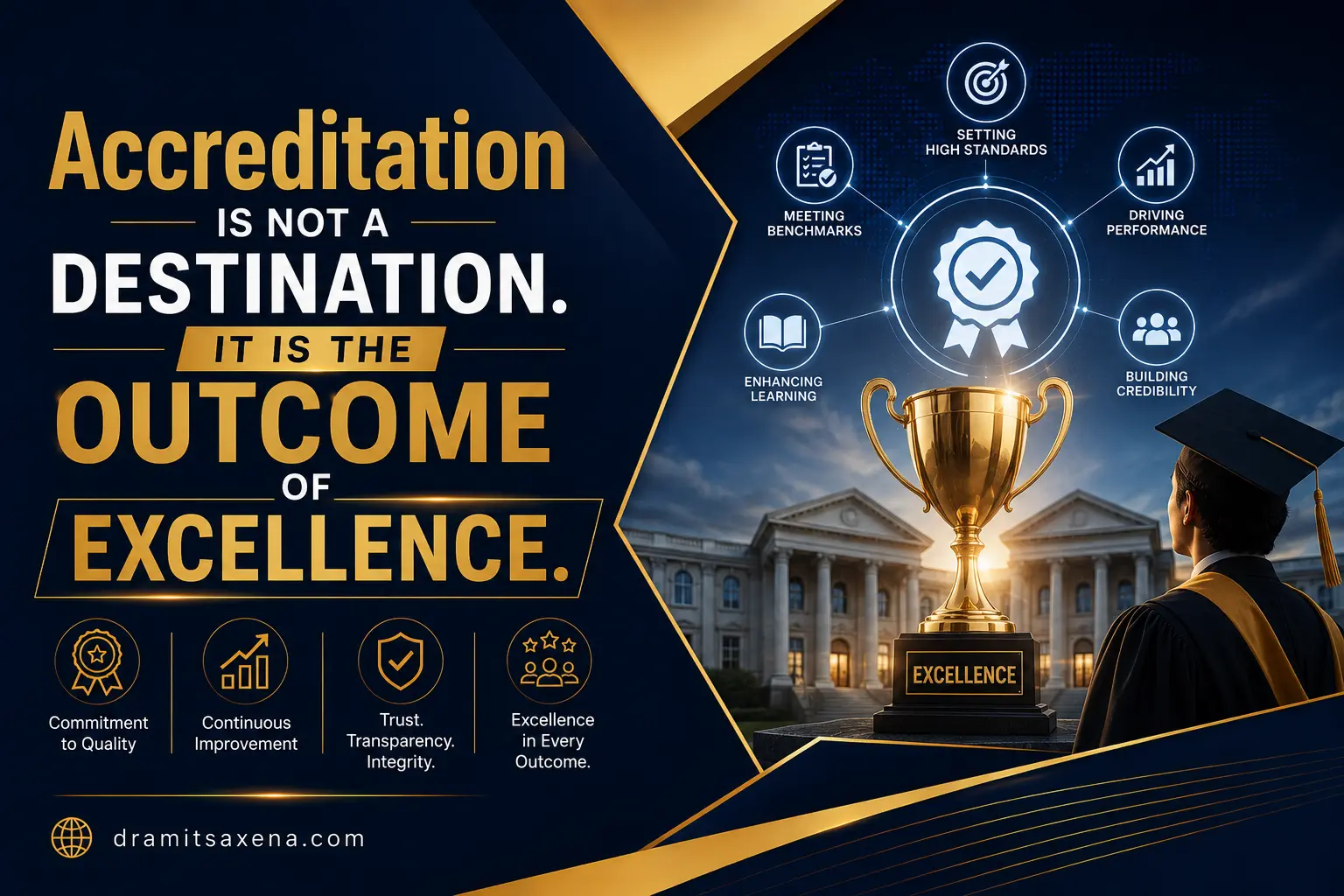
Accreditation is therefore not our objectiveâÂÂit is the evidence that our systems, people, and culture meet global standards.
The Road Ahead
The future belongs to institutions that think strategically rather than tactically.
Business schools should resist the temptation of chasing logos and instead invest in building enduring academic ecosystems.
Strong governance, exceptional faculty, student-centric learning, research, innovation, and continuous quality assurance create institutions worthy of international recognition.
As I often say:
âÂÂDonâÂÂt chase accreditation. Build excellence. Accreditation is not the beginning of the journey, it is the acknowledgement that the journey has been worthwhile.âÂÂ
For institutions committed to lasting impact, excellence is the destination. Accreditation simply tells the world they have arrived.